 Stakely
Why Consumer Sentiment Is So Gloomy While Americans Keep Spending
Economy·October 5, 2026
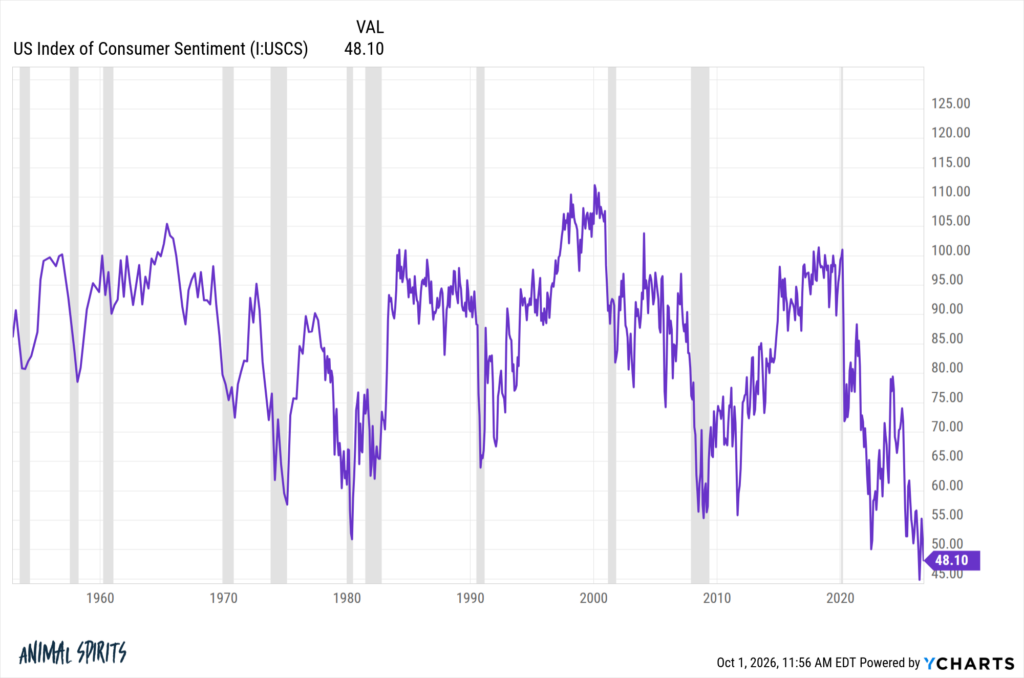
Consumer sentiment readings have spent years stuck at levels that historically signal a deep downturn. Yet people keep traveling, dining out and buying things. That disconnect has become one of the more puzzling features of the modern economy, and it raises a fair question for investors: how much should anyone rely on these surveys?
The core problem is that sentiment polls measure what people say, not what they do. Respondents are asked how they feel about the economy, prices and their finances, and the answers are shaped heavily by mood, news coverage and politics. Spending data tells a different story. Retail sales, services consumption and travel have all held up far better than the headline sentiment numbers would suggest.
Inflation is a big part of the explanation. Price growth has cooled from its peak, but the level of prices remains much higher than it was a few years ago. Consumers do not judge the economy by the annual rate of change. They judge it by what groceries, rent and car insurance cost compared with what they remember paying. Wages have mostly caught up on average, but the sting of higher prices lingers in how people answer a survey.
Politics adds another layer. Responses now split sharply along party lines, and the split flips depending on who holds the White House. Supporters of the party in power tend to report rosy views, while opponents report dismal ones, almost regardless of their own financial situation. That makes the headline number less a read on household economics and more a read on partisan identity.
Methodology matters too. Several of the best-known surveys have shifted from phone interviews to online panels in recent years. That change can alter who responds and how they answer, which makes comparisons with decades of earlier data less clean than they appear on a chart. A reading that looks like the worst since the 1980s may partly reflect a different way of asking the question.
None of this means households are carefree. Many are stretched, especially younger and lower-income families, and the pressure from housing costs and borrowing rates is real. But the evidence suggests the very low sentiment readings overstate the distress that is actually showing up in behavior.
For investors, the practical takeaway is to weigh actions over opinions. Hard data such as employment, income growth, delinquency rates and actual spending have been far better guides to the path of the economy than surveys of mood. Sentiment can still be a useful contrarian signal at extremes, and a sudden drop in spending would deserve attention. But using a depressed survey reading alone to predict a recession, or to time the market, has been a costly habit over the past several years.
Reporting based on an external source.