 Stakely
Stocks or Bonds? Why Going All-In on Either Is a Gamble
Portfolio Strategy·October 8, 2026
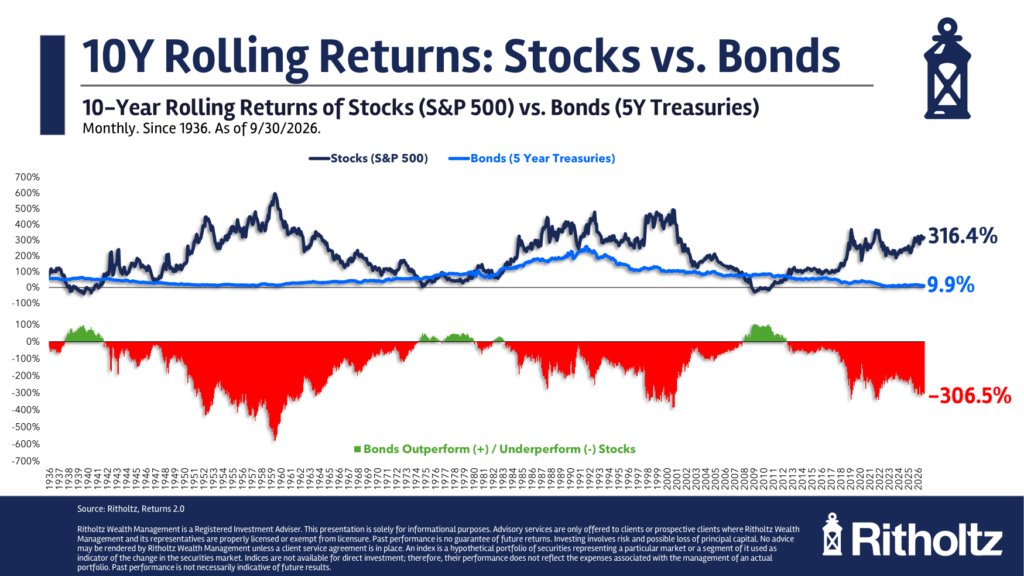
A common question for new and seasoned investors is whether a portfolio should hold nothing but stocks, or nothing but bonds. Both extremes are simpler than they sound, and both carry real risks that tend to surface at the worst possible moments.
A 100% stock portfolio offers the greatest long-term growth potential, since shares of businesses have historically outpaced most other major asset classes over multi-decade periods. The cost is volatility. During the 2007 to 2009 financial crisis, broad U.S. equity indexes lost roughly half their value. An investor who needed that money during the downturn could have been forced to sell at a steep loss.
A 100% bond portfolio, by contrast, typically delivers steadier income and smaller swings in value. Bonds are not risk-free, however. When interest rates rise, existing bonds lose market value, and in 2022 broad bond indexes posted one of their worst years on record. Over long stretches, inflation can also erode the purchasing power of fixed payments, leaving an all-bond investor with returns that may fall short of their goals.
For most people, the practical answer lies between the two. Investors with decades before they need the money can usually tolerate more stock exposure, while those nearing retirement or relying on their portfolio for income often benefit from a larger share of bonds. The right mix depends on time horizon, savings needs, and how an investor would actually behave during a sharp market decline. A portfolio that looks ideal on paper can be a poor fit if it leads to panic selling.
Reporting based on an external source.