 Stakely
Stocks or Bonds? Ten-Year History Usually Favors Stocks, With Notable Exceptions
Investing·November 19, 2026
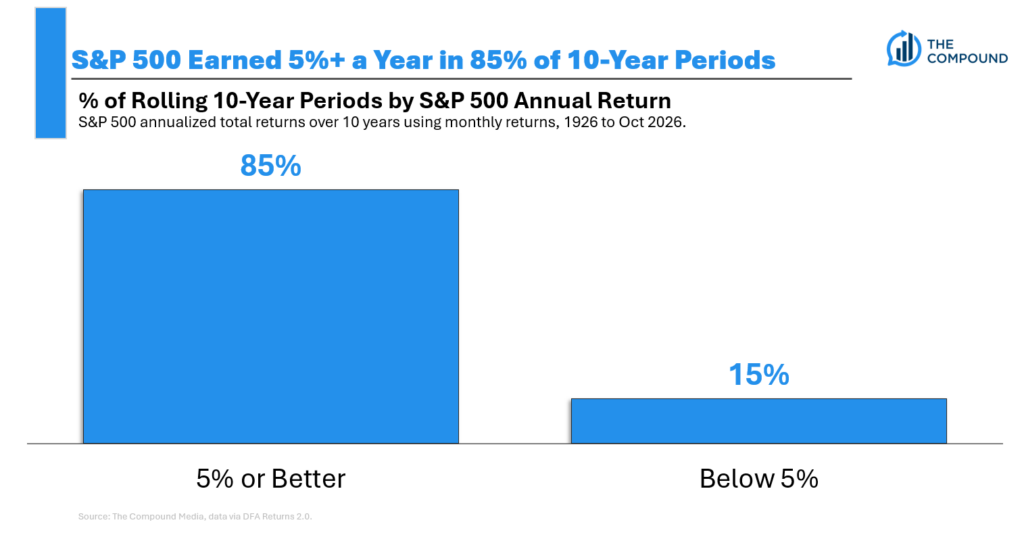
For long-term investors, one question comes up again and again: over a decade, which is likely to do better, stocks or bonds? A recent post from A Wealth of Common Sense takes up that question directly, asking how often bonds have actually beaten stocks over 10-year periods.
The historical pattern leans toward stocks. Across rolling 10-year windows in the US market, equities have come out ahead in most of them. The reason is simple: stocks carry more risk, and investors are generally paid for enduring sharp declines along the way. Bonds still win in some stretches, though. The clearest recent example is the decade that began in 2000, when two severe bear markets left the broad stock market with a poor cumulative return while high-quality bonds delivered steady gains.
The starting point matters as much as the asset class. When stock prices are high relative to earnings, the expected return from equities over the following decade tends to be lower. When bond yields are high, bonds begin with a larger cushion of income. Inflation, interest-rate moves and the exact dates chosen can all change the answer, which is why a single 10-year comparison can look very different depending on when it starts.
For investors, the takeaway is less about picking a permanent winner and more about matching the mix to a time horizon and tolerance for losses. A decade is long enough for stocks to usually come out ahead, but not long enough to guarantee it.
Reporting based on an external source.