 Stakely
Sports Betting Is Getting Richer, and Prediction Markets Are Skirting the Rules
Sports Betting·November 10, 2026
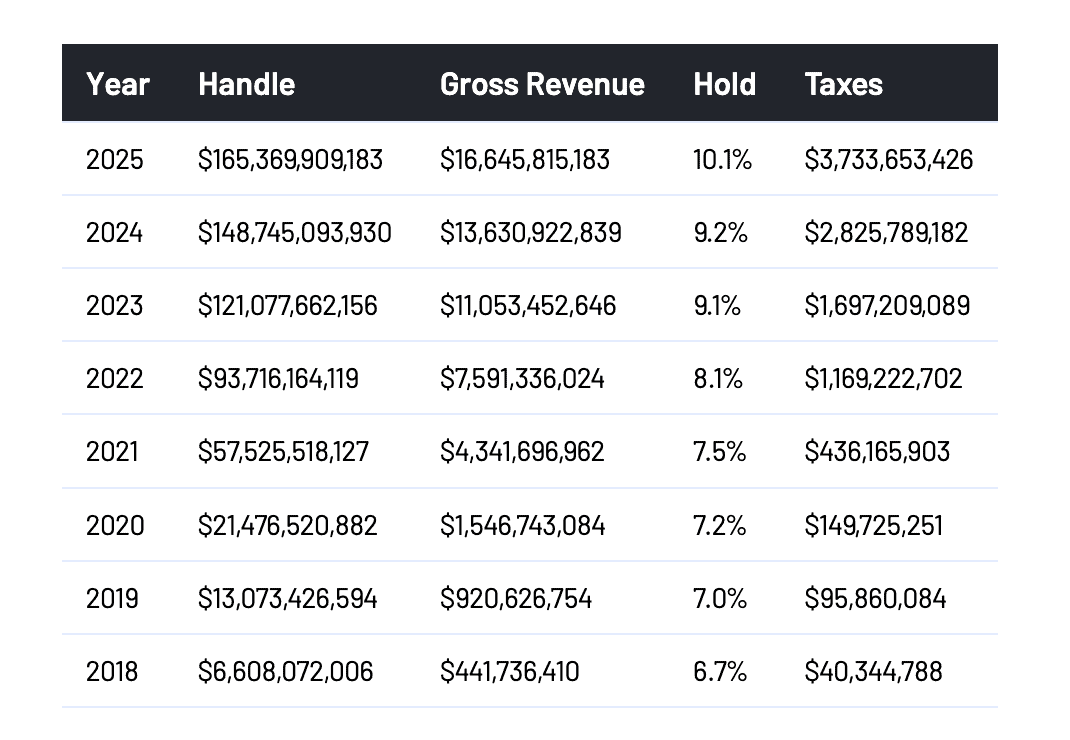
Roughly half of American men between 18 and 49 now have an online sportsbook account, up from 39% in 2024, according to figures cited in a recent opinion column on gambling. Total handle, the amount wagered, rose from $6.6 billion in 2018 to $165 billion in 2025, a roughly twenty-five-fold increase in seven years. That growth traces back to the Supreme Court's 2018 decision that struck down the federal ban on sports betting and handed the question to the states. Thirty-nine states and Washington, D.C. now allow it.
Volume alone does not explain the industry's improving economics. Hold, the share of each wagered dollar that sportsbooks keep, climbed from 6.7% to 10.1% over the same period. Much of that gain comes from parlays, particularly same game parlays, which tie several outcomes from a single contest into one ticket. Citing analysis from Sportsboom, the column puts the house edge on these bets between 20% and 35%, compared with about 4.5% for a standard point-spread wager. Their share of sportsbook revenue reportedly rose from under a fifth in 2021 to somewhere between 35% and 40% today.
Prediction markets have become both a competitor and a workaround. Kalshi and Polymarket began as platforms for event contracts and now list sports contracts that function much like bets. Because the Commodity Futures Trading Commission regulates them rather than individual states, they do not pay the state gaming taxes that sportsbooks owe, they do not apply the age limits that DraftKings or FanDuel enforce, and they are not required to honor state self-exclusion lists. Pew Research found that sports contracts made up 80% of trading on Kalshi and 39% on Polymarket from July 2024 onward. When Kalshi launched its own combo product in September 2025, shares of DraftKings and Flutter, FanDuel's parent, both fell by double digits.
The writer describes the irony plainly: sportsbooks escaped federal restrictions through a court ruling, and prediction markets are now escaping state rules through federal oversight. Adults under 21 in many states can legally place sports "predictions" on these platforms even where sportsbooks are banned. The column argues that the users most exposed are young men. A meta-analysis covering more than 150,000 participants found men were 3.4 times as likely as women to have gambling problems, and adults under 35 were 1.5 times as likely as middle-aged adults to do the same.
Researchers have linked the spread of legal sports betting to more bankruptcies and more domestic violence after major upset losses. The column also points to a tweet from the CEO of Kalshi promoting a longshot as a route to "generational wealth," and notes that data on Polymarket outcomes from January 2025 to April 2026 shows most users lose money. The author ties the argument to a family history: a grandfather who lost more than $1 million to gambling and, in the author's telling, lost his family as well.
Reporting based on an external source.