 Stakely
How Are U.S. Household Finances Holding Up?
Personal Finance·November 3, 2026
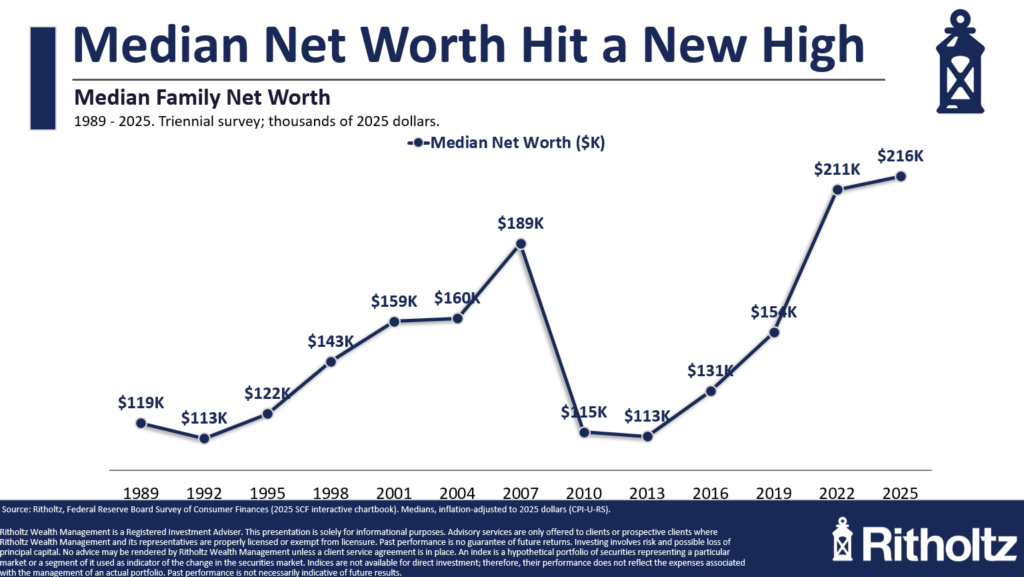
A household balance sheet is one of the simplest ways to judge how families are doing. It adds up what a household owns, including home equity, retirement accounts, savings, and investments, and subtracts what it owes, mostly mortgages, car loans, student debt, and credit cards. When the gap between assets and debts widens, families generally have more cushion against job losses, rate changes, and unexpected bills. When it narrows, that cushion thins.
A new update from the investment blog A Wealth of Common Sense revisits that question and asks where U.S. household finances stand now. The source material for this piece is a brief summary, so it does not lay out the specific figures behind the update. Readers who want the numbers, charts, and the author's reasoning should read the original post.
The question matters because balance sheets feed directly into spending. Households with strong net worth and manageable debt tend to keep consuming through rough patches. Households stretched thin pull back quickly, and consumer spending accounts for a large share of U.S. economic activity. That makes household balance sheets one of the gauges that economists, policymakers, and investors watch closely.
For anyone tracking the trend, the useful test is direction over time rather than any single reading. Are assets growing faster than liabilities? Are debt payments taking a larger share of income? Is the savings rate holding steady? A balance sheet that improves across several periods points to resilience. One that deteriorates while spending holds up can signal that households are borrowing to keep going, which is a weaker foundation.
Reporting based on an external source.