 Stakely
Earnings Are Outrunning Stock Prices, and Valuations Are Paying for It
Markets·October 30, 2026
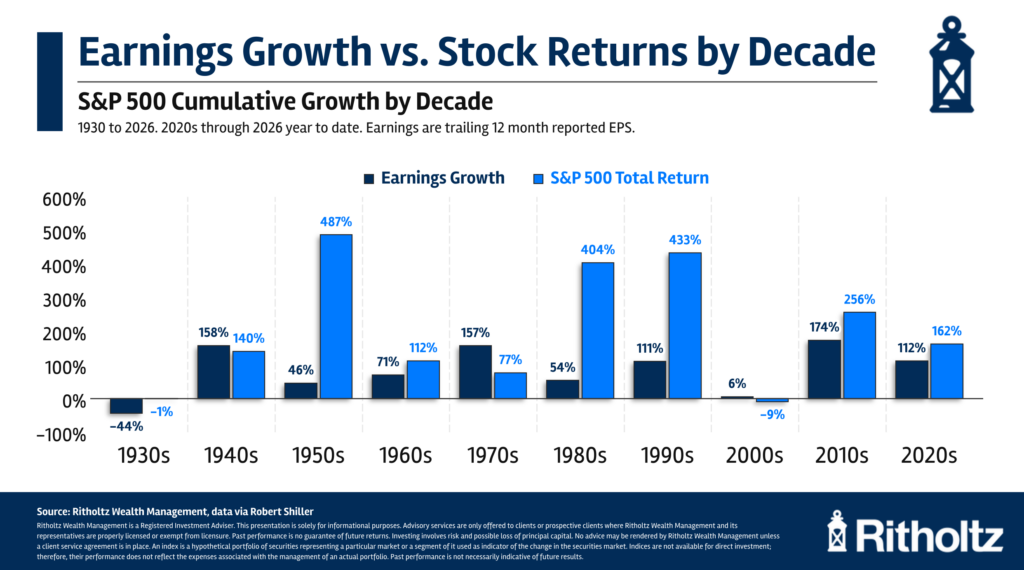
Corporate profits have been climbing faster than stock prices this year, and that gap is pulling investors' attention. The reason is less mysterious than it looks. Earnings and share prices measure different things, and they do not always move together.
Earnings are a record of what a company kept after costs over a set period. Share prices reflect what investors are willing to pay today for profits they expect in the future. When profits beat forecasts, the earnings figure moves first. Prices only follow when buyers conclude those profits will last and deserve a higher price.
That is where valuation comes in. Imagine earnings rising 15 percent while the index rises 5 percent, purely as an illustration. The price-to-earnings ratio then falls, because investors are paying less for each dollar of profit than they were before. Several forces can cause that kind of compression. Higher interest rates make distant profits less valuable today. Doubts about whether a profit surge will last keep buyers cautious. And when a handful of large companies dominate the averages, the broader market can lag behind the profit growth that is happening underneath.
Investors can read the gap in two ways. A falling price-to-earnings ratio can mean stocks are becoming more reasonably priced, which tends to help long-term buyers. It can also mean the market is skeptical of the earnings, and if profits later slip, prices could have further to fall. The signals that separate these readings are fairly concrete: whether companies keep beating estimates, whether profit margins hold, and whether expectations for interest rates shift.
The gap describes what has already happened. It is not a forecast for where the market goes next. Investors who want to act on it may be better served checking how much of their portfolio depends on the few sectors that drove this year's profit growth, rather than assuming that pattern will repeat.
Reporting based on an external source.