 Stakely
Could Borrowing for AI Set Off the Next Recession?
Fixed Income·October 12, 2026
The central question in the latest Talk Your Book episode is whether the borrowing fueling artificial intelligence could eventually drag the economy into recession. It is a fair thing to ask. Spending on data centers, chips and the power needed to run them has grown fast, and a growing share of that money now comes from bond and loan markets rather than from company cash flow alone.
The logic behind the concern is simple. When a major investment wave depends on credit, a slowdown in demand or a pullback by lenders can ripple outward quickly. Companies that have leaned on debt become more exposed if borrowing costs stay high or investors lose patience, and the pressure can spread to banks, private credit funds and bond holders. The episode treats this as a risk to monitor rather than a forecast of certain trouble.
The hosts also spend time on duration, a measure of how sensitive a bond's price is to changes in interest rates. Longer-duration bonds tend to fall more when rates rise. With the path of rates still uncertain, they argue that keeping duration low has been a reasonable defensive stance, though it is a bet on the outlook like any other.
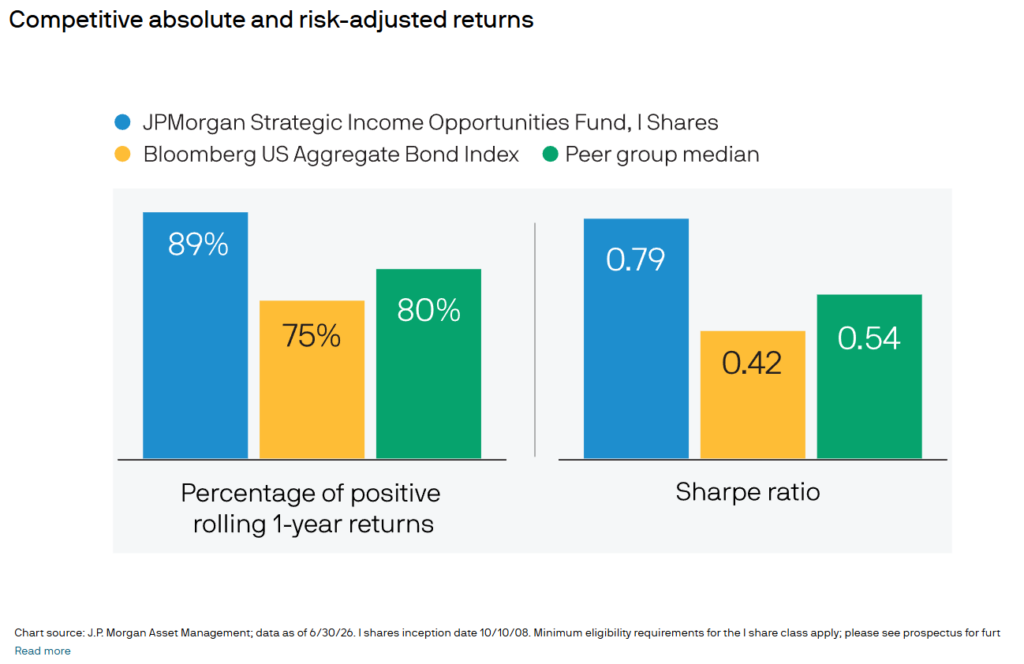
That context sets up a discussion of JSOSX, the JPMorgan Strategic Income Opportunities Fund. Because the fund is benchmark free, its managers are not measured against a standard index, which gives them room to hold cash, shorter-term securities or a mix of income assets as conditions change. The hosts point to that flexibility as the main advantage. The episode was sponsored by JPMorgan, so listeners should weigh the promotion accordingly and review the fund's prospectus and risk disclosures before drawing conclusions.
For investors, the takeaway is that the AI debt question remains open. Useful signals to watch include credit spreads, the volume of new corporate bond issuance tied to data center projects, and whether revenue from AI products grows fast enough to justify the borrowing behind it.
Reporting based on an external source.