 Stakely
Can Dividends Really Pay the Bills?
Income Investing·November 5, 2026
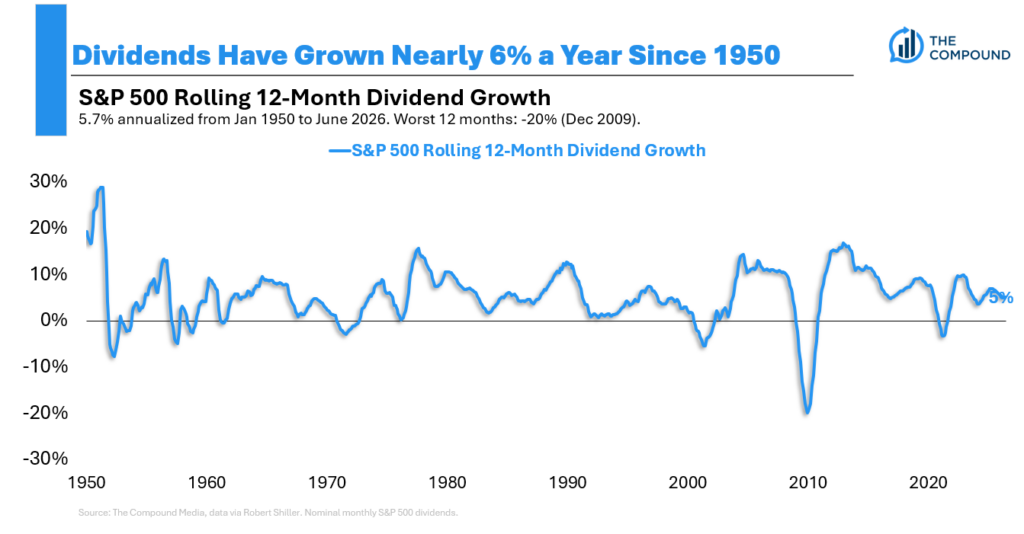
The idea of covering living expenses with dividend checks, rather than selling shares, has long drawn retirees and would-be early retirees. The appeal is easy to see. A portfolio that generates enough income can fund spending without forcing the investor to sell holdings during a market slump, and the underlying shares stay in place. In practice, though, the strategy is less simple than the pitch suggests.
The main advantage is practical and psychological. Dividends are paid on a schedule regardless of where the market closed on a given day, so they can feel steadier than repeatedly selling shares to raise cash. Many established dividend payers have long track records of raising their payouts, and a well-built income portfolio can spread cash flow across sectors and payment dates.
The drawbacks are just as real. Investors who chase the highest yields often end up with companies whose payouts are not sustainable. A generous yield can be a warning sign, because it sometimes reflects a share price that has fallen for reasons worth examining. Dividend portfolios also tend to cluster in certain industries, such as utilities, financials and consumer staples, so a downturn in one or two of those sectors can hit income all at once. Dividends are never guaranteed, and companies can cut or suspend them, often during recessions when the income is needed most.
Taxes and inflation complicate the math. Many countries tax qualified dividends at rates lower than ordinary income, but the tax bill still reduces the cash available for spending. A fixed or slowly growing income stream can also lose buying power over a retirement that lasts decades.
Most planners who address the question treat dividends as one part of a broader withdrawal plan rather than the whole engine. Total return, which combines dividends with share price growth, is another way to judge what a portfolio can support. Anyone considering the approach should review a company's payout history, debt levels and how much of their spending the income would actually cover. For some investors with a diversified mix of holdings and realistic expectations, living off dividends is workable. For those who expect the checks to stay flat or rise forever, it is a much riskier bet.
Reporting based on an external source.