 Stakely
Bond Yields Are Rising, So Why Is the Stock Market So Calm?
Markets·October 5, 2026
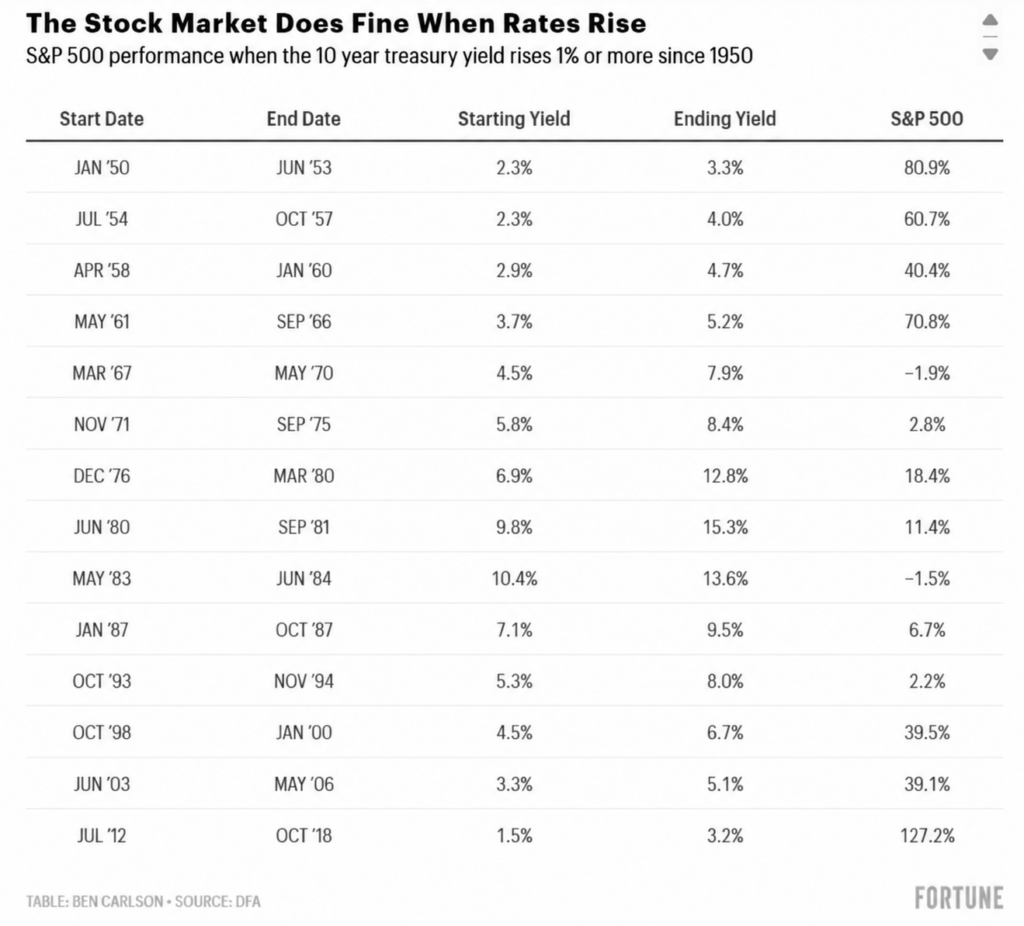
For months, the standard warning has been that rising bond yields would eventually drag stocks lower. Higher yields mean richer competition for investor cash, a higher discount rate on future earnings and more expensive borrowing for companies. So far, the stock market has mostly shrugged.
That gap between the bond market's message and the equity market's mood is the puzzle many investors are now trying to solve. Volatility in stocks has stayed relatively subdued even as yields have moved up, which looks odd if the two are supposed to be tightly linked.
One explanation is that the level of yields matters less than the reason behind them. When yields climb because the economy is growing and corporate profits are healthy, stocks can absorb the move comfortably. Rates rising on the back of strength is a very different story from rates rising because of a credit scare or an inflation panic. Equities tend to wobble in the second case, not the first.
Another factor is the state of corporate balance sheets. Many large companies locked in cheap, long-dated debt in earlier years, so higher market rates have not yet fed through to their interest costs. The pain of higher yields arrives slowly, as old debt matures and has to be refinanced. That lag can make the market look immune when it is really just early.
Index composition also plays a part. The biggest companies in the S&P 500 carry large cash piles and strong margins, which makes them less sensitive to borrowing costs than the average business. When a handful of mega-cap names drive index returns, the headline number can stay steady even if smaller, more leveraged firms feel more strain underneath.
There is also a behavioral element. Investors who have been told to expect a selloff for a long time can become numb to the warning. Dip buyers have been rewarded repeatedly, which encourages more of the same and keeps volatility compressed. Calm tends to feed on itself, at least until something breaks it.
None of this means the risk has gone away. Low volatility is not the same as low risk, and stretched valuations leave less room for error if yields keep climbing or if growth disappoints. Markets can go a long time ignoring a pressure point, then reprice quickly when a catalyst arrives.
For long-term investors, the practical takeaway is modest. Trying to time a volatility spike based on bond yields has been a frustrating exercise, and a diversified plan that does not depend on predicting it is still the sturdier approach. The absence of turbulence today is worth noting, but it is not a guarantee about tomorrow.
Reporting based on an external source.