 Stakely
Big Market Drawdowns Put Diversification to the Test
Markets·November 6, 2026
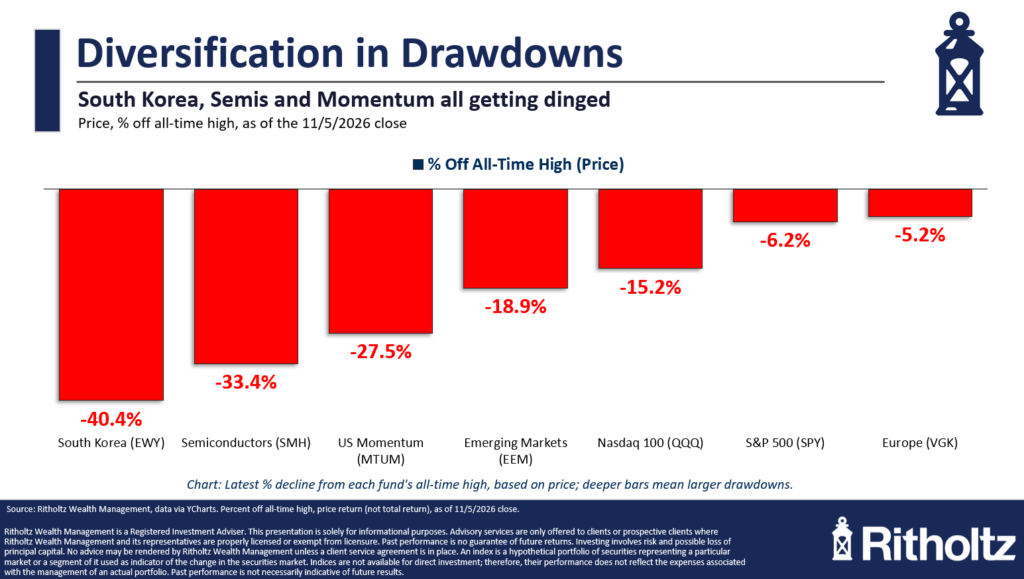
Stock markets took a sharp turn lower this week, with several sizable drawdowns that left many portfolios well below their recent highs. A drawdown is the drop from a portfolio's or index's peak value to its later low point, and it is the number that tends to matter most to investors who need to draw on their savings.
The usual response to a sell-off like this is to revisit the case for diversification, the practice of spreading money across asset classes, sectors, regions and securities that do not all react the same way to the same news. When one part of a portfolio is falling, another part may hold steady or even rise, which can soften the overall decline and make it easier to stay invested.
Diversification has limits, though. In a broad panic, correlations between assets often rise, and stocks that normally move independently can fall together. Bonds, cash and other defensive holdings can help in that situation, but they do not always cushion losses, and they carry their own risks, including inflation and interest-rate sensitivity.
For long-term investors, the practical question is less about avoiding drawdowns altogether and more about whether the portfolio was built to survive them. That means holding an allocation that matches the time horizon and the tolerance for losses, rebalancing when weights drift, and avoiding the temptation to sell after the damage is already done.
Reporting based on an external source.