 Stakely
Autocallable Notes Go Mainstream as Income ETFs Chase Yield
Income Strategies·October 5, 2026
Income hunters have a new toolbox, and it comes wrapped in an ETF. On the latest Talk Your Book podcast from A Wealth of Common Sense, Mike Laughlin of Janus Henderson walked through how autocallable and stability notes work, and why funds built on them are drawing attention.
Structured notes were long the preserve of private banks and wealthy clients, sold one at a time with opaque terms. Packaging them inside an exchange-traded fund changes the access question. Investors can buy a diversified basket of notes with a ticker, daily liquidity and a published holdings list.
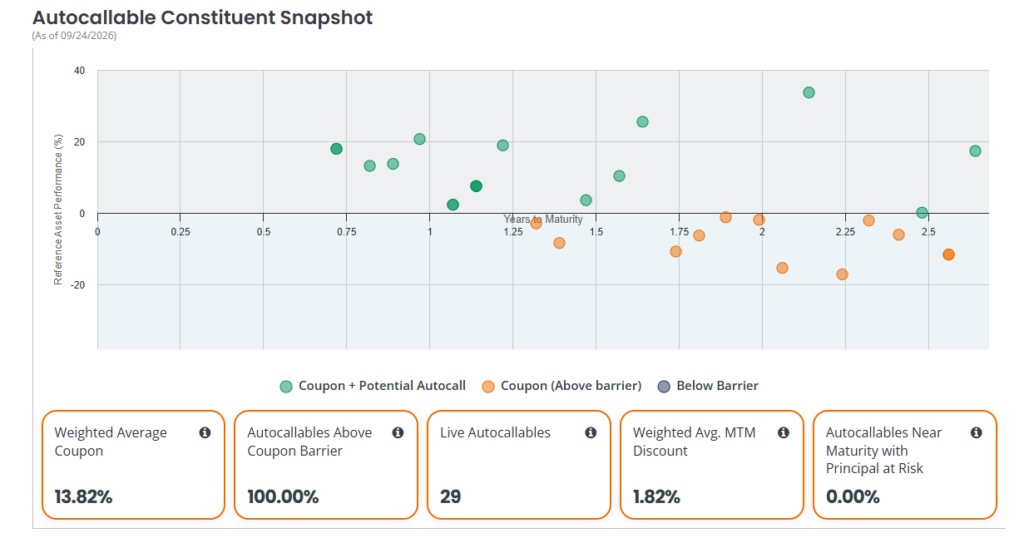
The appeal is straightforward. An autocallable note pays a coupon tied to the performance of an underlying index or basket. If the underlying sits above a set barrier on an observation date, the note pays out. If it rises above a trigger level, the note is called early and principal is returned. Stability notes follow a similar logic but aim to deliver steadier payments, with the barrier set to absorb a certain amount of market weakness before income is affected.
In effect, the investor is selling a slice of the market's volatility and being paid for it. That is how these strategies can offer yields well above what plain bonds or dividend stocks provide.
The trade-offs matter, and Laughlin addressed them. Upside is typically capped, because an early call hands back principal just when markets are performing well, leaving the investor to reinvest. If the underlying falls through the barrier, losses can arrive quickly and income can stop. There is also issuer credit risk, since these notes are obligations of the banks that write them. Spreading holdings across many issuers, underlyings and observation dates is one way a fund can soften that exposure.
For advisers and individual investors, the practical question is what role the sleeve plays. A structured income ETF is not a bond substitute. It behaves more like an equity-linked income product with defined risk features, and its payouts depend on market conditions in ways a coupon from a Treasury does not.
The broader story is demand. With investors still searching for yield outside traditional fixed income, product makers are pushing options-style and note-based strategies into the ETF wrapper. Understanding the mechanics, including barriers, call triggers and counterparty exposure, is the minimum homework before adding one to a portfolio.
Reporting based on an external source.